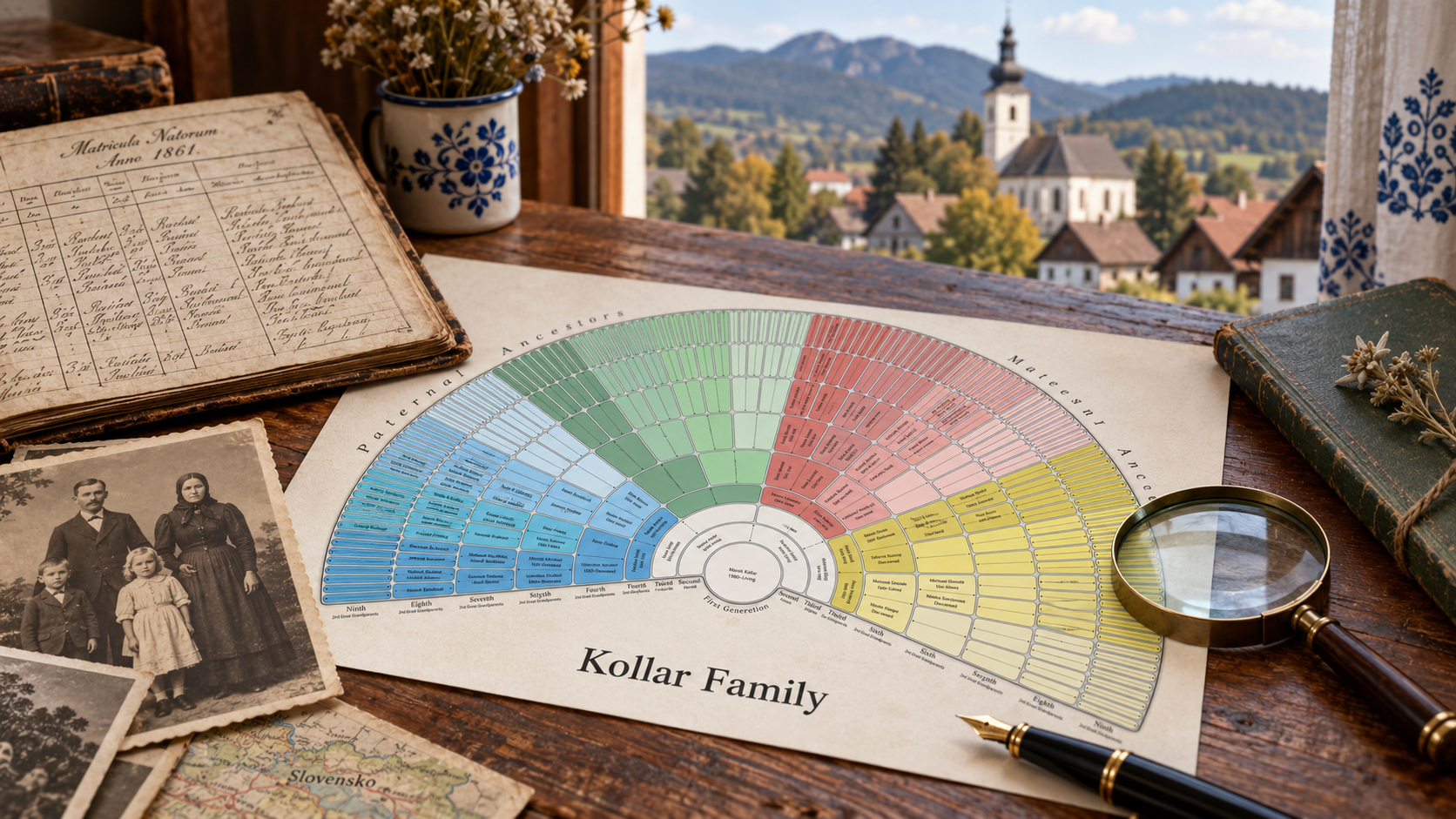
Discover the people and places behind your Slovak family history.
NEST works with genealogy researchers and local sources to trace family branches through historical records and transform names, dates and documents into a coherent family story.
Depending on the available records, research may identify ancestral villages, historic homes, occupations, family relationships, census information, graves and other details showing how previous generations lived.
The final result can range from focused research of one family line to a more extensive illustrated family chronicle.
What Can We Discover?
Depending on the research scope and surviving records, we may uncover:
- direct ancestors and family branches
- birth, marriage and death records
- church and civil registry documents
- historical census records
- ancestral villages and regions
- historic addresses and house numbers
- occupations and family livelihoods
- siblings and extended family members
- migration between villages and regions
- military and wartime records
- family graves and cemeteries
- historical photographs and family material
- surname origins
- historical context about everyday family life
The aim is not only to identify names and dates, but to reconstruct the lives behind them.
Your Family Chronicle
Research findings can be prepared as a structured personal family chronicle.
Depending on the chosen scope, it may include:
- family trees
- profiles of individual ancestors
- copies of historical records
- translations and explanations of documents
- census information
- maps of ancestral locations
- photographs of villages, homes and graves
- historical and social context
- documented research sources
- sections for different paternal and maternal branches
The result becomes a permanent record of the family’s history that can be preserved and passed on to future generations.
1. Tell Us What You Know
Send us the information you already have – names, approximate dates, places, photographs, documents or family stories.
2. Research Assessment
We evaluate the available information and determine the likely research scope and relevant historical sources.
3. Family Research
Genealogical research is carried out using available registers, census material, archives and other historical records.
4. Your Family Story
The findings are organised into a clear documented result, with the option of a complete illustrated family chronicle.
From €500
Every genealogy project is different.
The final price depends on:
- number of family branches researched
- number of generations
- availability of historical records
- complexity of names and locations
- archive visits required
- translation and interpretation of documents
- extent of the final family chronicle
Before the research begins, the client receives an individual research proposal and quotation.
Visit the places your family came from
Once your ancestral locations have been identified, NEST can transform the research into a personalised heritage journey through Slovakia.
Depending on the findings, the programme may include:
- ancestral villages and towns
- churches connected with family records
- historic cemeteries and family graves
- former family homes or locations
- regional archives and museums
- places where ancestors lived or worked
- meetings with local contacts where possible
NEST can arrange accommodation, private transport, guiding and a tailor-made itinerary.
Even a name, approximate date and place of origin can provide a useful starting point.
This depends on the surviving historical records. In some cases, family lines can be traced into the 18th century or earlier.
Yes. Research can focus on one surname or include several paternal and maternal branches.
Where available, relevant registers, census records and other documents can be incorporated into the research.
Yes. NEST can prepare a tailor-made heritage journey based on the locations identified during the research.
No. Historical records may be incomplete, damaged or unavailable. The likely research scope is therefore assessed before the work begins.
Why this product works commercially
Highly personalised product.
Every project is built around the client’s own family history, creating a strong emotional connection that standard touring products cannot replicate.
Clear differentiation.
The product is not simply genealogy research and not simply a tour. It combines documentary research with the possibility of physically visiting ancestral villages, churches, cemeteries, former family homes and other relevant locations.
Strong appeal for diaspora markets.
The service is especially relevant for descendants of Slovak emigrants living in the United States, Canada, Australia and other overseas markets who may know only a surname, village name or fragment of family history.
Research can generate travel demand.
Genealogy research frequently identifies real places connected with the client’s ancestors. These discoveries can naturally lead to a personalised heritage journey to Slovakia.
High emotional value.
The final result can become more than a travel experience. A documented family chronicle may be preserved for future generations or used as a meaningful family gift.
Flexible scope.
Projects can range from focused research into one surname or branch to a broader multi-generational family history involving several paternal and maternal lines.
Independent of fixed departure dates.
Unlike a standard escorted tour, the research can operate throughout the year and the subsequent journey can be arranged according to the client’s preferred travel period.
Expandable into a complete travel package.
Once the relevant locations are identified, NEST can arrange accommodation, private transport, guiding, archive visits and additional regional experiences.
What the Research May Include
Depending on the available records and agreed research scope:
- direct ancestral lines
- paternal and maternal family branches
- birth, marriage and death records
- church and civil registers
- historical population censuses
- ancestral villages and regions
- historic addresses and house numbers
- occupations and economic background
- family relationships and siblings
- migration between villages and countries
- military and wartime records
- cemeteries and family graves
- historical photographs
- surname origins
- interpretation of archival records
- maps showing ancestral locations
- documented research sources
The emphasis is not only on identifying names and dates, but on reconstructing the lives and environments of previous generations.
Possible Final Output
Research findings can be delivered in different formats depending on the agreed scope.
A more extensive project may include a personalised Family Chronicle combining:
- family trees
- individual ancestor profiles
- reproductions of original records
- explanations of historical documents
- census information
- maps of family origins
- photographs of relevant locations
- family and cemetery photographs
- historical context
- research notes and sources
Heritage Journey Option
From family research to a real journey
After ancestral locations have been identified, NEST can prepare a tailor-made heritage itinerary following the client’s family story.
The journey may include:
- ancestral villages and towns
- churches connected with births, marriages or baptisms
- cemeteries and family graves
- possible former family homes
- local museums and archives
- places where ancestors worked or lived
- meetings with local contacts where appropriate
- regional cultural and gastronomic experiences
NEST can arrange private transport, accommodation, guiding and the complete itinerary.
We research where your family came from – and, if you wish, we can take you there.
Best Suited For
- descendants of Slovak emigrants
- Slovak-American families
- Slovak-Canadian families
- Australians with Slovak ancestry
- families wishing to preserve their heritage
- travellers planning their first ancestral visit to Slovakia
- genealogy and family-history groups
- cultural and heritage travellers
- special-interest tour operators
- private FIT clients
- clients looking for a meaningful family gift
- tour operators seeking highly personalised heritage products
Product Format
Product type: Bespoke genealogy and heritage service
Destination: Slovakia
Research price: From €500
Final price: Based on research scope and available records
Operating period: Year-round
Research scope: Individually agreed
Travel component: Optional tailor-made ancestral journey
Transport: Private transport available on request
Guiding: Local English-speaking guide available
Accommodation: Selected according to itinerary and client preference
Target markets: FIT, diaspora, family heritage and special-interest travel
Commercial Notes for Tour Operators
This is best sold as a bespoke service rather than a fixed package.
The client normally begins by providing basic family information such as:
- surnames
- known villages or regions
- approximate birth dates
- immigration records
- old photographs
- family documents
- oral family history
NEST then assesses the likely research scope and prepares an individual quotation.
Where the research identifies meaningful ancestral locations, an additional travel programme can be developed as a separate or combined service.
This allows tour operators to offer a highly personalised Slovakia product without needing to build genealogy expertise internally.
Genealogy sample
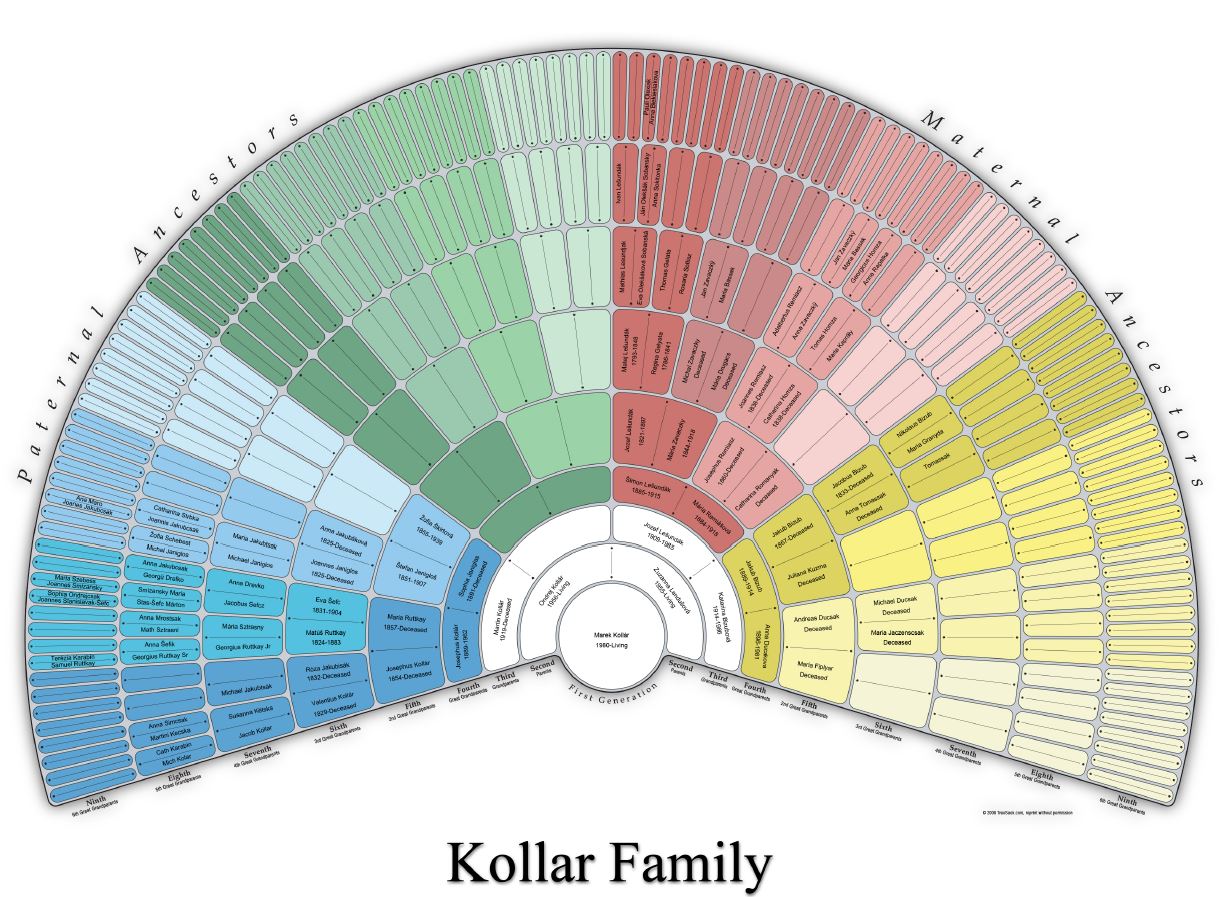
The Kollár Family Chronicle
More than 200 years of family history reconstructed from Slovak records
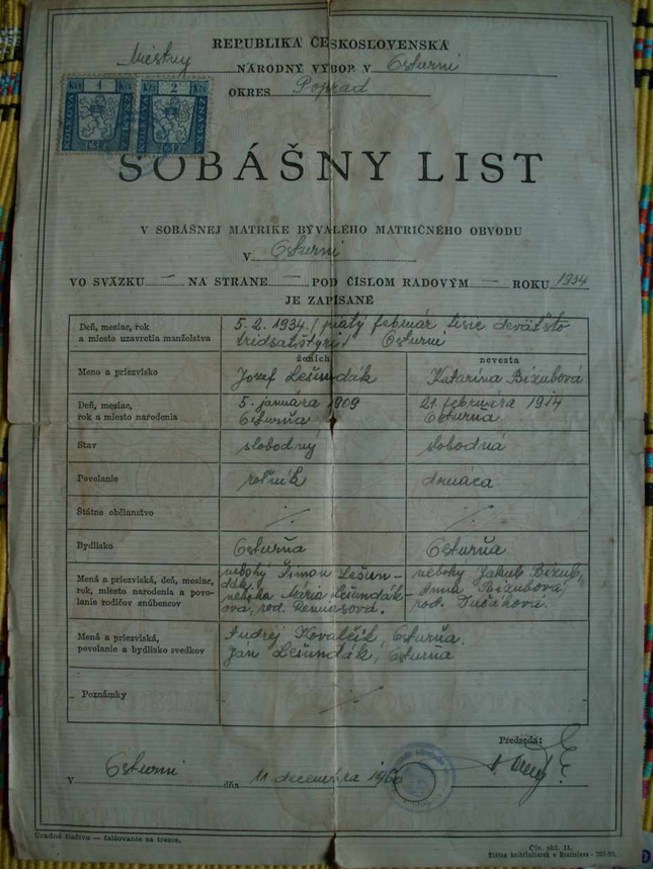
This sample family chronicle shows how genealogy research can transform names, dates and archival documents into the story of a family.
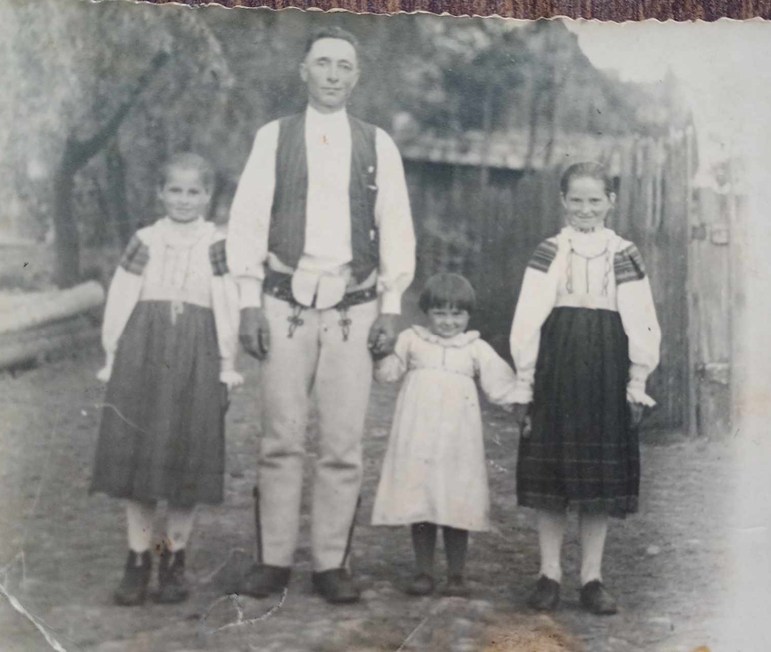
The research follows paternal and maternal family branches through villages in northern and eastern Slovakia, combining church registers, population censuses, family photographs, cemetery research and historical context.
This sample has been adapted for presentation purposes. Personal information about living family members may be anonymised.
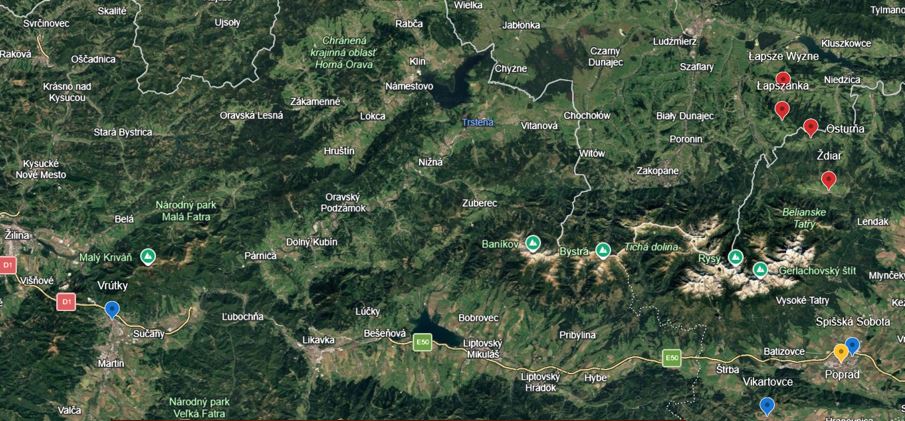
Where the Family Came From
The research identified several locations connected with different family branches.
Blue – paternal family locations
Red – maternal family locations
Yellow – present-day family location
Paternal Family – Kollár
The paternal branch takes us to Vikartovce and several generations of the Kollár family.
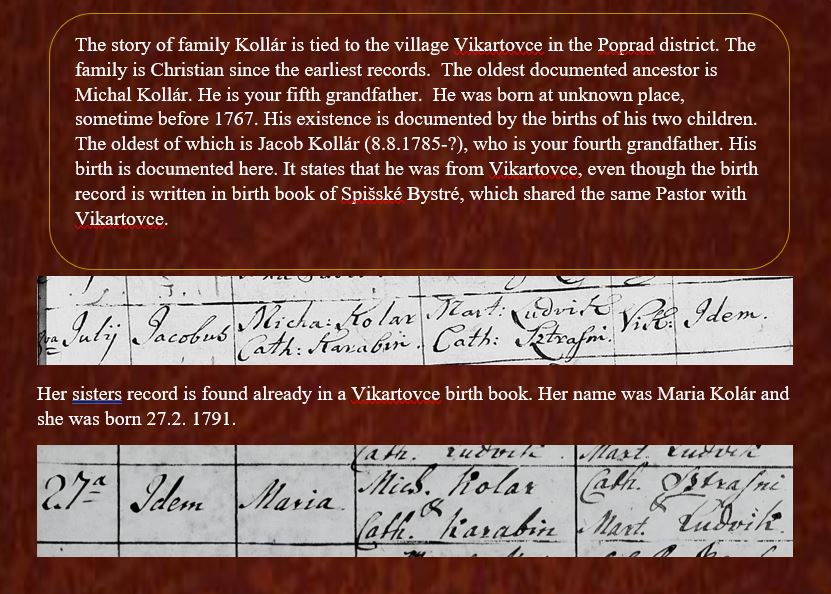
The documented story of the Kollár family is closely connected with Vikartovce, in today’s Poprad district.
The oldest documented ancestor identified in this branch is Michal Kollár, who lived before 1767. His son Jacob Kollár was born in 1785 and appears in historical church records associated with Vikartovce and Spišské Bystré.
Jacob Kollár married Zuzana Kecska, born in 1786.
The research identified ten known children born between 1808 and 1831. Their records allow the family line to be followed through successive generations.
Later generations remained closely connected with Vikartovce and agricultural life. Historical census material allows us to reconstruct not only family relationships but also their homes, occupations and social circumstances.
A Snapshot of Family Life in 1869
More than names and dates
The 1869 population census provides an unusually detailed picture of how the family lived.
Valentine Kollár lived in Vikartovce in house number 30 with his wife Rosalia and their children.
The property contained:
- 1 living room
- 2 pantries
- 1 kitchen
- 2 woodsheds
- 2 stables
- 1 sheep pen
- 1 barn
Valentine worked as a farmer on his own land. His eldest son Joseph helped on the farm, while another son attended the local folk school.
The census even recorded that Valentine, his wife and eldest son could read but could not write.
Maternal Family – Lendušák
The maternal branch leads to Osturňa and a family story extending across today’s Slovak-Polish border.
The maternal branch leads to Osturňa, historically home to the Lešundák / Lendušák family.
A possible early ancestor, Ivan Lendušák, appears in the 1767 urbarium of Osturňa. However, no surviving birth record has yet proven his direct connection to the later documented family line.
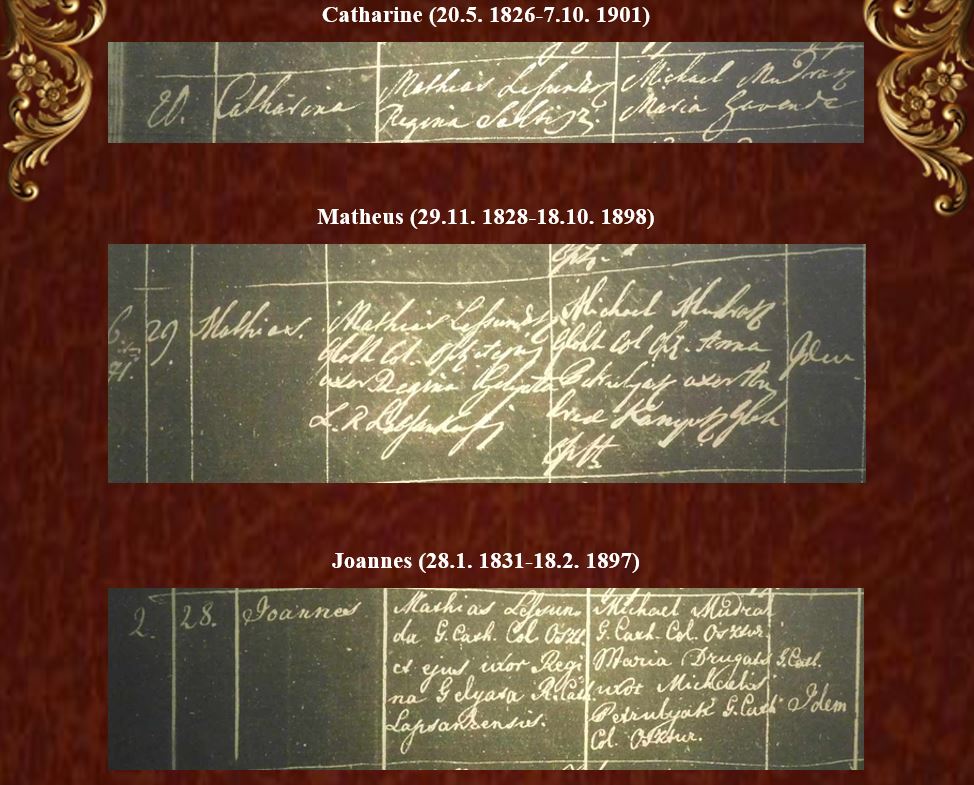
The earliest ancestor with stronger documentary support is Matheus Lešundák. His family can be reconstructed through marriage and birth records connected with Osturňa and surrounding villages.
Later generations can be followed through the 19th century using church registers, census material and family records.
The Lešundák Family in the 1869 Census
Joseph Lešundák and his wife Mária lived in house number 154 in Osturňa.
The building contained several related households. The research identified not only family relationships but also the layout of the household, occupations and family members living under one roof.
Joseph worked as a farmer, while one of his relatives worked as a day labourer.
The house bearing number 154 may still correspond to the historic family home, although the continuity of house numbering cannot be confirmed.
Research Sources
The family chronicle was assembled from several types of historical material:
- church birth registers
- marriage records
- historical family indexes
- 1869 population census
- 1930 population census
- existing genealogical research
- family photographs
- cemetery research
- photographs of ancestral locations
What a Family Chronicle Can Include
Family Tree
A visual overview of generations and family branches.
Original Records
Historic registers, censuses and archival documents.
Ancestor Profiles
Names, dates, relationships and documented events.
Family Stories
Occupations, households, migration and significant events.
Ancestral Places
Villages, homes, churches, cemeteries and landscapes.
Research Sources
A clear record of where each finding originated.